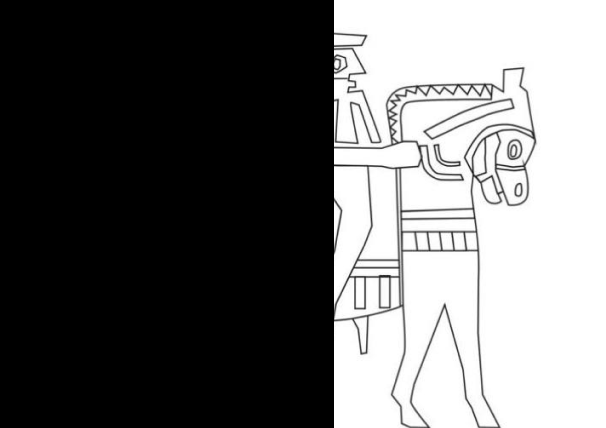
before
after
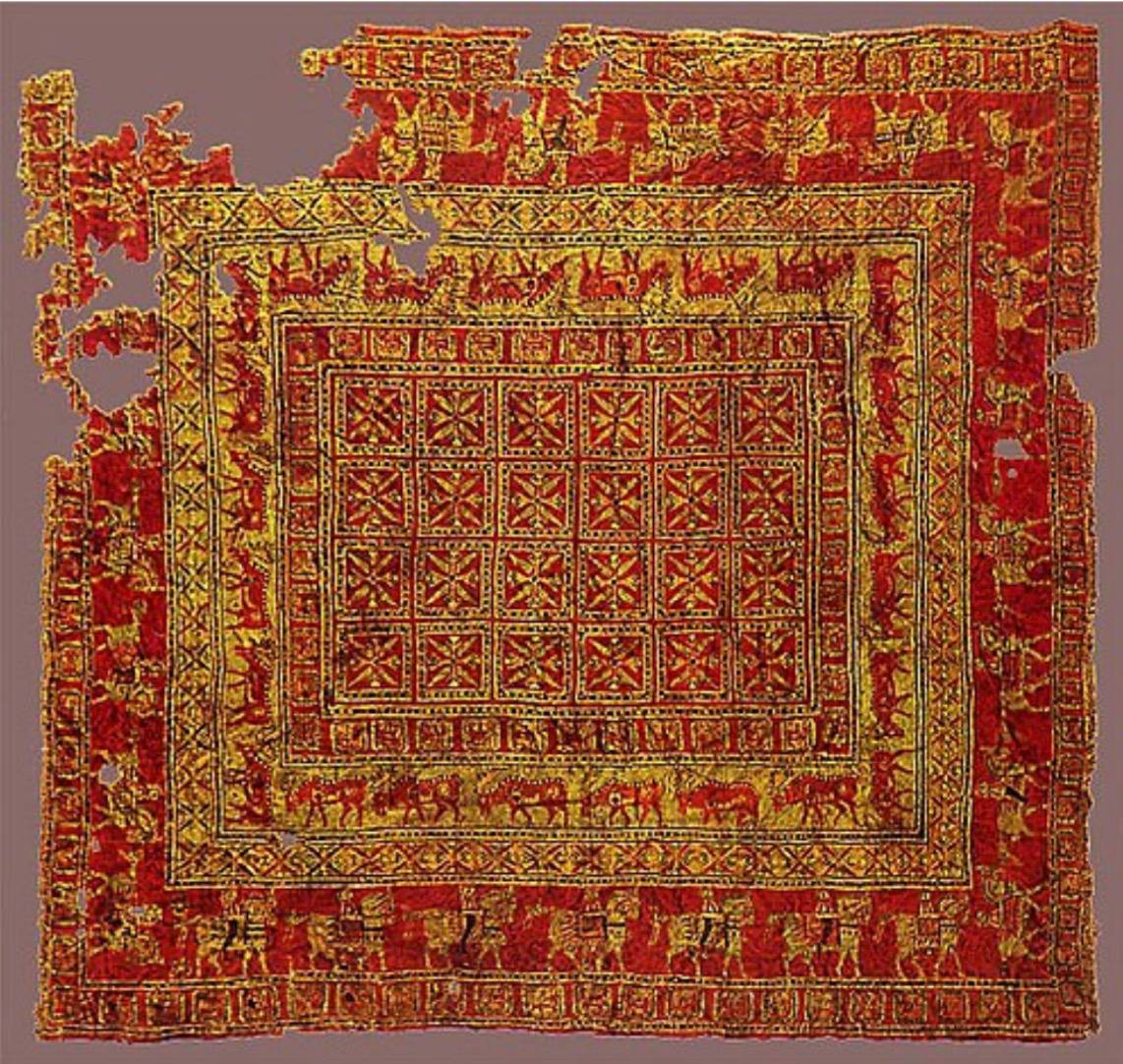
Discovery: Discovered in 1949 by archaeologist Sergei Rudenko in the Altai Mountains, in the Pazyryk 5th kurgan.
Age and Preservation: Dates back to the 5th-4th centuries BC. The carpet survived for around 2500 years due to the freezing of the burial mound.
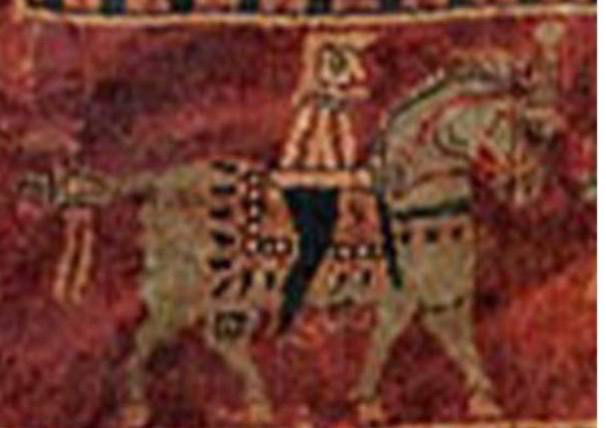
The composition features a central field (24 cross-shaped figures formed by stylized lotus buds) and borders depicting eagle-headed griffins, wild goats/deer, and a procession of horses and riders.
Armenian/Urartian Hypothesis: Researchers Volkmar Gantzhorn and Ulrich Schurmann argue for an Armenian origin based on the symmetric double knot technique and traditional Armenian symbolism. The use of Armenian cochineal (vordan karmir) dye from the Ararat plain serves as a key argument.
Persian Hypothesis: Some scholars link it to Achaemenid Persia, noting similarities with the reliefs of Persepolis.
The original is kept in the Hermitage Museum in St. Petersburg. This piece is created by an honorary member of the Artists' Union of Armenia and has undergone professional examination. For commercial use, contacting the author is required.